
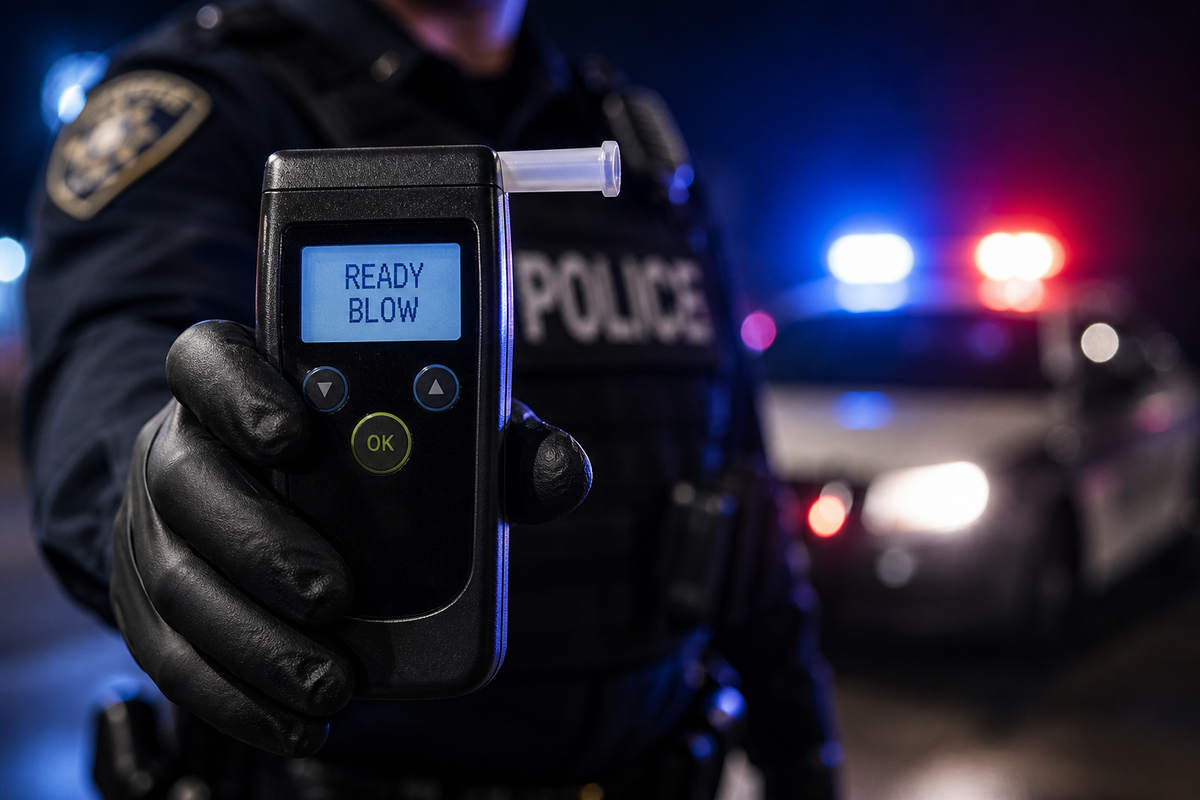
Understanding your rights during a DUI stop starts with knowing Georgia's implied consent law. Whether you refuse a breathalyzer or comply, both paths carry real legal weight. This article breaks down exactly what Georgia law says, what happens if you refuse, and what factors are worth understanding if you ever find yourself in that situation.
Georgia's Implied Consent Law Explained
When you got your Georgia driver's license, you agreed to something most people never read: the state's implied consent law. Under this law, simply driving on Georgia roads means you have already given your consent to chemical testing if a law enforcement officer has probable cause to believe you're driving under the influence.
Any person who operates a motor vehicle upon the roads and highways of this state is deemed to have given consent to a chemical test of their blood, breath, urine, or other bodily substances for the purpose of determining the presence of alcohol or drugs, provided that the request is made by a law enforcement officer with probable cause for a DUI arrest.
In plain terms: by driving in Georgia, you have pre-agreed to be tested. But you still have the legal right to refuse. The law does not physically force you to blow into a breathalyzer. What it does is attach automatic consequences to that refusal.
Two Different Breathalyzers: Know the Difference
Not all breathalyzer tests are the same under Georgia law, and this distinction matters significantly for your case.
Refusing the roadside handheld device is legally different from refusing the official post-arrest Intoxilyzer 9000 at the station. Only refusal of the official test triggers implied consent penalties.
What Happens If You Refuse the Official Breathalyzer?
Refusing the official chemical test after a DUI arrest sets off a chain of consequences that begin almost immediately. Here is what Georgia law requires.
Under O.C.G.A. § 40-5-67.1, the arresting officer submits a sworn report to the Department of Driver Services. You have exactly 30 days from your arrest to request an administrative license suspension (ALS) hearing. Miss this deadline and your license is automatically suspended with no further recourse.
A first-offense refusal results in a one-year administrative license suspension. This is completely separate from any criminal DUI case and happens regardless of whether you are ultimately convicted.
When the suspension results specifically from a refusal, you are generally not eligible for a limited driving permit (work permit or hardship license) during the suspension period, which impacts your ability to commute, care for family, and carry out daily responsibilities.
Georgia prosecutors can present your refusal to the jury and argue that an innocent person with nothing to hide would have taken the test. Courts have upheld refusal evidence as admissible. A skilled defense attorney can challenge how it is framed, but it does not disappear from the record.
Upon refusal of a chemical test, the arresting officer must submit a sworn report to the Department of Driver Services. The resulting license suspension takes effect 30 days after arrest unless an administrative hearing is properly and timely requested.
What Happens If You Take the Test?
Agreeing to the breathalyzer does not guarantee a good outcome, and it changes the playing field. A BAC of 0.08% or higher (0.04% for commercial drivers, 0.02% for drivers under 21) becomes direct chemical evidence in a DUI prosecution. However, breathalyzer results are not infallible.
Experienced DUI defense attorneys regularly challenge these results by examining whether the Intoxilyzer 9000 was properly calibrated and maintained, whether the officer was certified to operate the device, whether proper testing procedures were followed, whether medical conditions could have skewed the reading, and whether the required 20-minute observation period was properly completed before testing.
A BAC reading, while powerful evidence, can sometimes be suppressed or successfully disputed, but refusal evidence is harder to neutralize once it is in front of a jury. Neither choice is risk-free.
Should You Refuse a Breathalyzer in Georgia?
This is the question everyone asks, and the truthful answer is: it depends on your individual situation. No article can substitute for legal advice tailored to your circumstances. But here are the four key factors experienced DUI attorneys weigh when evaluating this decision.
If you have had very little to drink and believe your BAC is below the legal limit, the test could work in your favor. If you know you have consumed significant alcohol, a high BAC reading becomes powerful direct evidence against you.
A prior DUI conviction dramatically changes the calculus. Second and third DUI penalties in Georgia are far harsher, and a refusal suspension stacks on top of any criminal sentence. The stakes rise significantly for repeat offenses.
A one-year hard suspension with no limited permit option is serious. If driving is essential to your livelihood or family care, the immediate impact of refusal may outweigh the risk of a BAC result in your specific situation.
If an officer already has documented erratic driving on dash-cam, failed field sobriety tests, and observed the odor of alcohol, a refusal removes one piece of chemical evidence, but the prosecution may still have ample grounds to proceed.
Georgia's Implied Consent Notice: What Officers Must Do
Georgia law requires arresting officers to read a specific implied consent notice before requesting a chemical test. This notice must inform you of your right to an independent blood test performed by a qualified person of your own choosing, in addition to any state-administered test.
If an officer fails to properly read the implied consent notice, or reads the wrong version, that procedural error could provide grounds to challenge the admissibility of both the test results and any refusal. The specific words used, and when they were spoken, matter significantly to a defense attorney reviewing your case.
What to Do After a DUI Arrest in Georgia
Whether you took the breathalyzer or refused it, the steps you take immediately after a DUI arrest have a significant impact on your case.
- Stay calm and do not argue with the arresting officer, because anything you say can be used against you.
- Invoke your right to remain silent beyond basic identification information.
- Ask to speak with an attorney before answering any further questions.
- Note the details of your stop as soon as possible, including the time, location, what the officer said, and what tests were requested.
- If your license was taken, request an ALS administrative hearing within 30 days to preserve your driving privileges.
- Contact a Georgia DUI defense attorney immediately, as time-sensitive deadlines begin the moment of your arrest.
"A DUI arrest is not a conviction. The decisions made in the hours and days immediately following that arrest can dramatically shape the outcome of your case."
Arash Jafary, Esq., Former Assistant Solicitor General, Cobb CountyThe Bottom Line on Breathalyzer Refusal in Georgia
Georgia drivers can legally refuse a breathalyzer test after a DUI arrest, but that refusal is not without cost. The state's implied consent law imposes a one-year hard license suspension for a first offense, no limited driving permit during that suspension, and allows prosecutors to present your refusal as evidence of consciousness of guilt at trial.
At the same time, submitting to the test hands the prosecution direct chemical evidence that, while not impossible to challenge, is often the centerpiece of a DUI case. Neither choice is easy, and both carry real risk.
The most important thing you can do after a DUI arrest in Georgia, whether you refused the breathalyzer or not, is to speak with an experienced Georgia DUI defense attorney as quickly as possible. The 30-day deadline to request an administrative hearing alone makes time critical, and the right attorney can assess the specific facts of your arrest and help you understand every option available.